Forgiveness is one of the most misunderstood parts of healing.
People often think forgiveness means excusing what happened. Accepting betrayal. Minimising pain. Pretending wounds no longer exist.
But forgiveness was never meant to erase the wound.
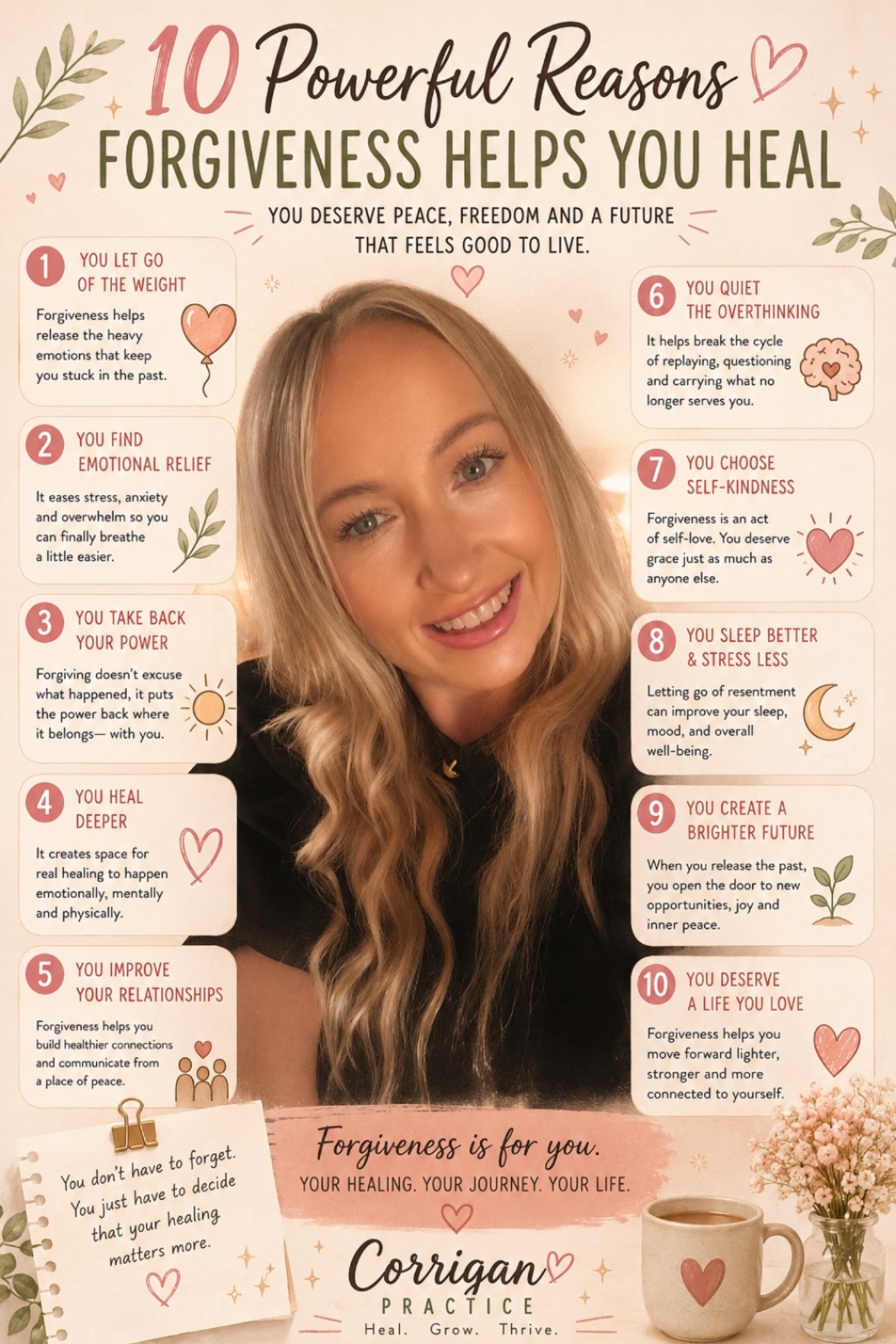
Sometimes forgiveness is simply deciding that your suffering will no longer control your life.
For a long time, I believed holding onto pain protected me. Anger felt safer than grief. Resentment felt safer than vulnerability. If I stayed hurt, maybe I could stay guarded. Maybe I would never be hurt that deeply again.
But wounds carried for too long begin shaping the nervous system. The mind replays conversations. The body stores tension. Sleep becomes restless. Trust becomes difficult. You start surviving old pain instead of living your present life.
That is the hidden cost of unforgiveness.
Not because the pain was not valid. Not because you should have “moved on.” But because carrying emotional weight for years can quietly exhaust the soul.
Forgiveness did not happen for me overnight.
It happened slowly. In layers. In therapy rooms. In tears I hid from other people. In moments where I realised I was still emotionally tied to things that no longer deserved access to my peace.
And I began understanding something important:
Forgiveness is not always for the person who hurt you. Sometimes forgiveness is an act of self-release.
A decision to stop reliving the same emotional prison. A decision to stop letting the past dictate your nervous system. A decision to reclaim your energy, identity, and future.
Some wounds leave scars. Some losses never fully make sense. Some people never apologise. Some endings never feel fair.
But healing asks us a difficult question: “How long do I want this pain to define me?”
Forgiveness does not mean reconnecting. It does not mean removing boundaries. It does not mean forgetting. And it certainly does not mean what happened was acceptable.
Sometimes forgiveness simply sounds like: “I refuse to abandon myself because someone else abandoned me.” “I refuse to let bitterness become my personality.” “I deserve peace too.”
There are people carrying years of grief, betrayal, shame, anger, and heartbreak inside bodies that are exhausted from survival. Many are functioning externally while internally fighting battles nobody sees.
But healing becomes possible when we stop asking: “Did they deserve forgiveness?” and start asking: “Do I deserve freedom?”
Because forgiveness is not surrender. It is release.
Not release from memory. But release from emotional captivity.
Maybe that is why forgiveness feels so frightening. Because without the pain, we are forced to meet ourselves again. Not just the wounded self , but the healing self too.
And perhaps the deepest form of forgiveness is not even toward others.
Perhaps it is learning to forgive ourselves: for staying too long, for ignoring red flags, for self-abandonment, for coping badly, for surviving imperfectly, for becoming hardened, for needing love, for being human.
Healing begins the moment we stop demanding perfection from wounded people trying to recover from painful experiences.
Forgiveness is not weakness. Sometimes it is the bravest thing a person can do.
Not because the wound disappears. But because they finally decide their future deserves more attention than their pain.


 CorriganSays
Leave a comment