“The past affects the present even without our being aware of it.”
Francine Shapiro.
There are moments in life that split us in two, before and after.
Before I started EMDR, I was surviving. Holding it all together. Functioning, yes, but tightly wound, always waiting for something to go wrong.
Inside, I was carrying the wreckage of what had happened to me, and what had never been spoken for me.
And beneath all that? A fierce longing for peace.
I didn’t know EMDR would change my life. I just knew I couldn’t keep going the way I was.
But this is not just a story about trauma.
It’s a story about what happens when we’re finally given a space to heal. A space held with care, skill, and something I hadn’t known I needed, safety.
Where Healing Begins: Safety, Trust, and a Gentle Voice
My therapist, a quiet, grounded man who never rushed me. Before we went anywhere near trauma, we built the foundation: trust.
He took time to learn my story, not just the big events, but the subtle wounds too, the silences, the betrayals, the long-held beliefs that had shaped my identity.
Together, we created a timeline where we mapped out key experiences. Seeing them laid out on paper was painful, but also strangely empowering. For the first time, it made sense. I made sense.
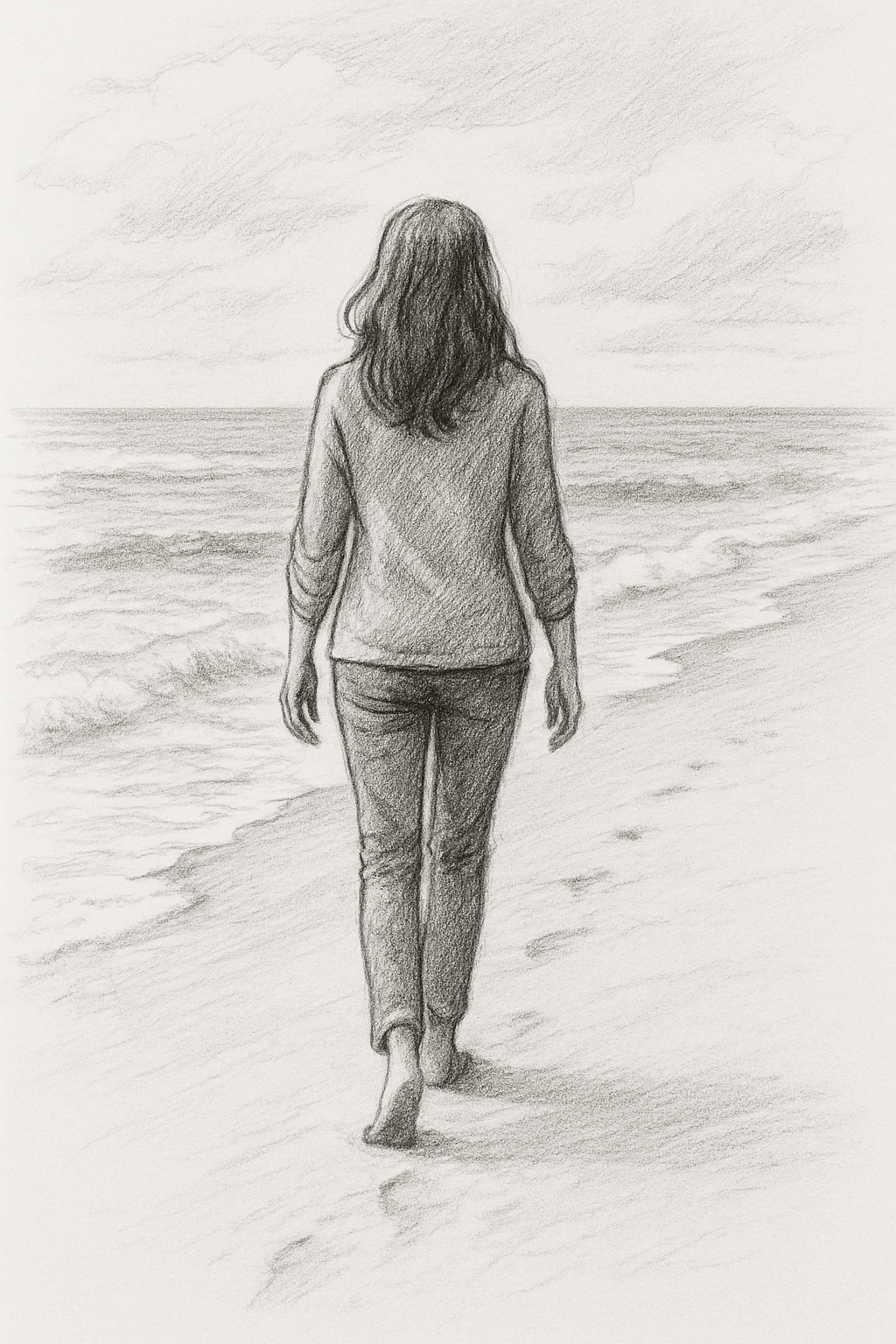
He helped me build a Safe Place in my mind. Mine was a shoreline, still and warm, a place I could return to if the work became too much. And sometimes it was too much, but that never meant I failed. It just meant I was human. And healing.
When the real work began, the reprocessing. He would guide me with one gentle phrase that I still hear in my bones:
“Stay with that.”
Such a small sentence.
But in a world that had often silenced me, rushed me, dismissed me – it felt like a revolution.
The Brain’s Way of Healing
EMDR isn’t just talk therapy. It’s neurological.
When trauma happens, it can get “stuck” in the brain. The amygdala which is our fear center, stays lit up, while the prefrontal cortex (our rational brain) goes offline. That’s why trauma isn’t remembered like a story, it’s relived like it’s happening now.
EMDR uses bilateral stimulation , eye movements, tapping, or alternating pulses which help the brain reprocess the memory. This mimics the brain’s natural healing mechanism during REM sleep, allowing the memory to move from raw panic into integrated understanding.
Bit by bit, EMDR helped my brain unfreeze.
It helped my body exhale.
The Session Aftermath: Learning Self-Care
After each session, I didn’t bounce back into “normal life.”
I was tender. Sometimes shattered. Sometimes confused.
So I had to learn self-care in the deepest sense ,not bubble baths and candles (though sometimes, yes) but compassion.
I learned to:
- Rest without guilt.
- Journal what I couldn’t say aloud.
- Wrap myself in a blanket and let myself cry.
- Take walks in nature to reconnect with my body.
- Eat something nourishing, even when I didn’t feel like it.
- Speak kindly to myself when I felt broken open.
These weren’t acts of weakness. They were acts of resistance. Of reclamation.
Because I was finally giving myself what trauma had taken away, care, on my own terms.
What Trust Can Do
.cannot overstate this: the trust I built with my therapist was the anchor of my healing.
He didn’t just witness my pain. He held it without flinching.
He never rushed me. Never asked me to be more “resilient” than I was ready to be.
He reminded me, that through his presence that I was not alone, not too much, and never beyond help.
He didn’t just help me process the pain.
He taught me how to hold space for myself.
The Unthinkable: Compassion for Those Who Hurt Me
And here’s the part I never expected.
As I healed, something softened.
I started to see beyond the behaviours of the people who hurt me. I began to ask, “What pain made them this way?”
This doesn’t mean I excuse it.
It doesn’t mean I’ll ever forget.
But EMDR opened something I had shut tight: empathy, even for those who couldn’t love me well.
I want to help people now.
Even the ones who caused the wounds, because they, too, were once wounded.
Because trauma doesn’t start with us. It’s passed down, inherited, replayed, until someone has the courage to break the cycle.
I want to be that someone.
And I want to help others be that someone too.
The Gifts EMDR Gave Me
- A calm body one that doesn’t constantly scan for danger.
- A clear mind one that isn’t hijacked by the past.
- A reclaimed story one where I am no longer the broken one, but the brave one.
- A softened heart even toward those who never said sorry.
And most of all, a calling.
To hold space for others.
To sit in the dark with someone and whisper, “Stay with that.”
To show them, as my therapist showed me, that there is life after survival. There is light after the freeze.
There is you, waiting to come home to yourself.
If you’re considering EMDR:
It’s not easy. It’s not fast.
But it’s real. And it’s worth it.
Your healing isn’t selfish, it’s sacred.
And it just might change not only your life…
…but the lives of those still hurting in silence.
You don’t need to keep living in the shadows of what happened. You can step back into your body. You can reclaim the present. You can learn what safety feels like.
And you don’t have to do it alone.
“The wound is the place where the light enters you.” Rumi
And I?
I am full of light now.
 CorriganSays
Leave a comment